
IDE
SafireIDE
A Windows-native workbench for projects, source, forms, reports, dictionary/schema work, classes, build output, validation and controlled AI assistance.
Safire is not only a language, only a compiler or only an IDE. It is a RAD system for long-lived business applications where source ownership, build transparency and deployable targets matter.
A Windows-native workbench for projects, source, forms, reports, dictionary/schema work, classes, build output, validation and controlled AI assistance.
Source describes windows, reports, tables, queries, procedures, classes, mappers, web pages, business objects, help and project configurations.
The runtime path is designed for Windows desktop, services, web preview, web app, REST/SOAP/WebSocket, reports, installer and help-package targets.
The Build area now points developers toward the language, windows/controls, database system and Source Vault recovery model. The PDF cover images open their matching guides in new tabs.

Readable source, language structure, statements, procedures, classes, runtime objects and application patterns.
Open PDF
Window types, built-in controls, properties, metadata, events, bindings and developer quick-start guidance.
Open PDF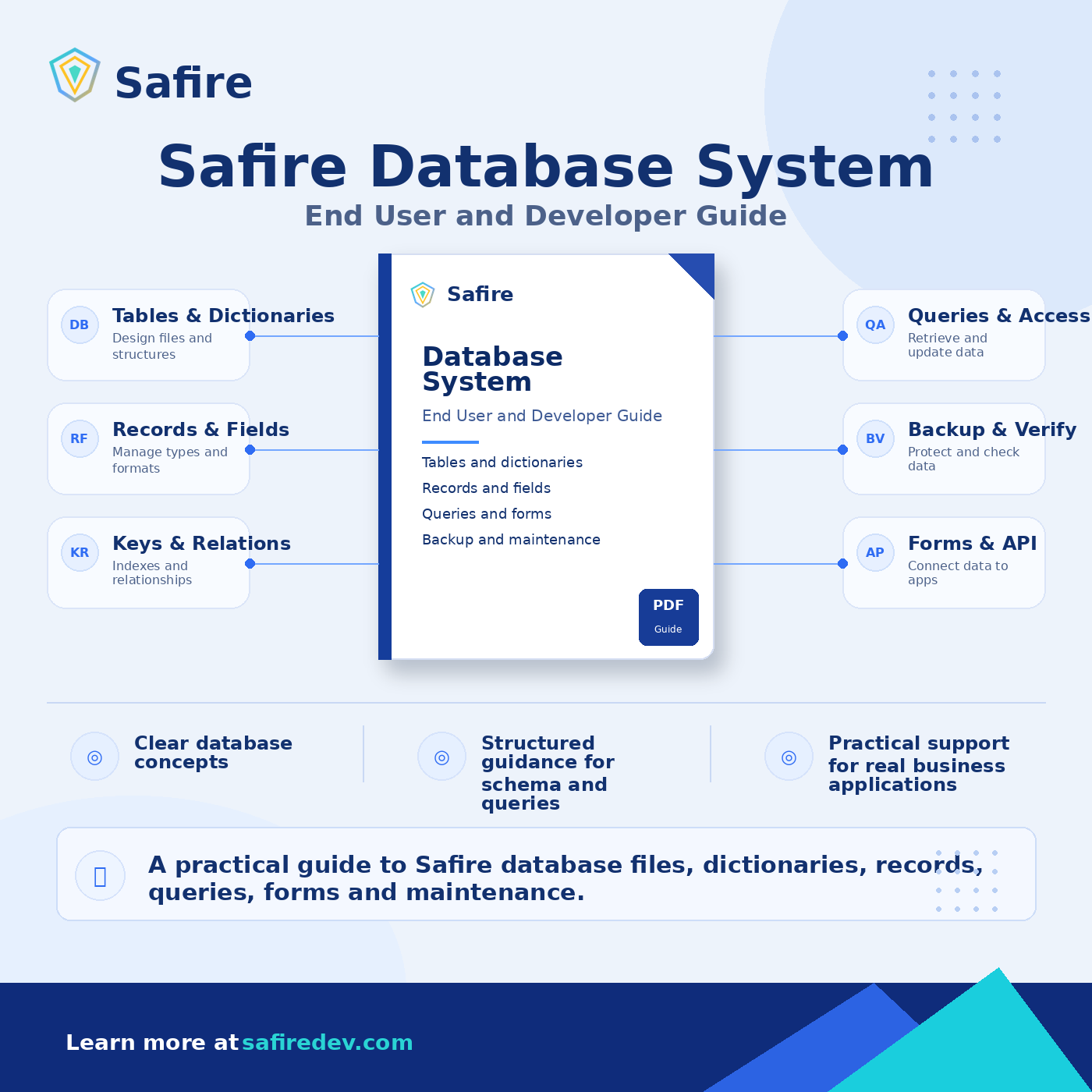
Tables, dictionaries, records, field types, keys, relations, queries, forms, backup, verify and maintenance.
Open PDF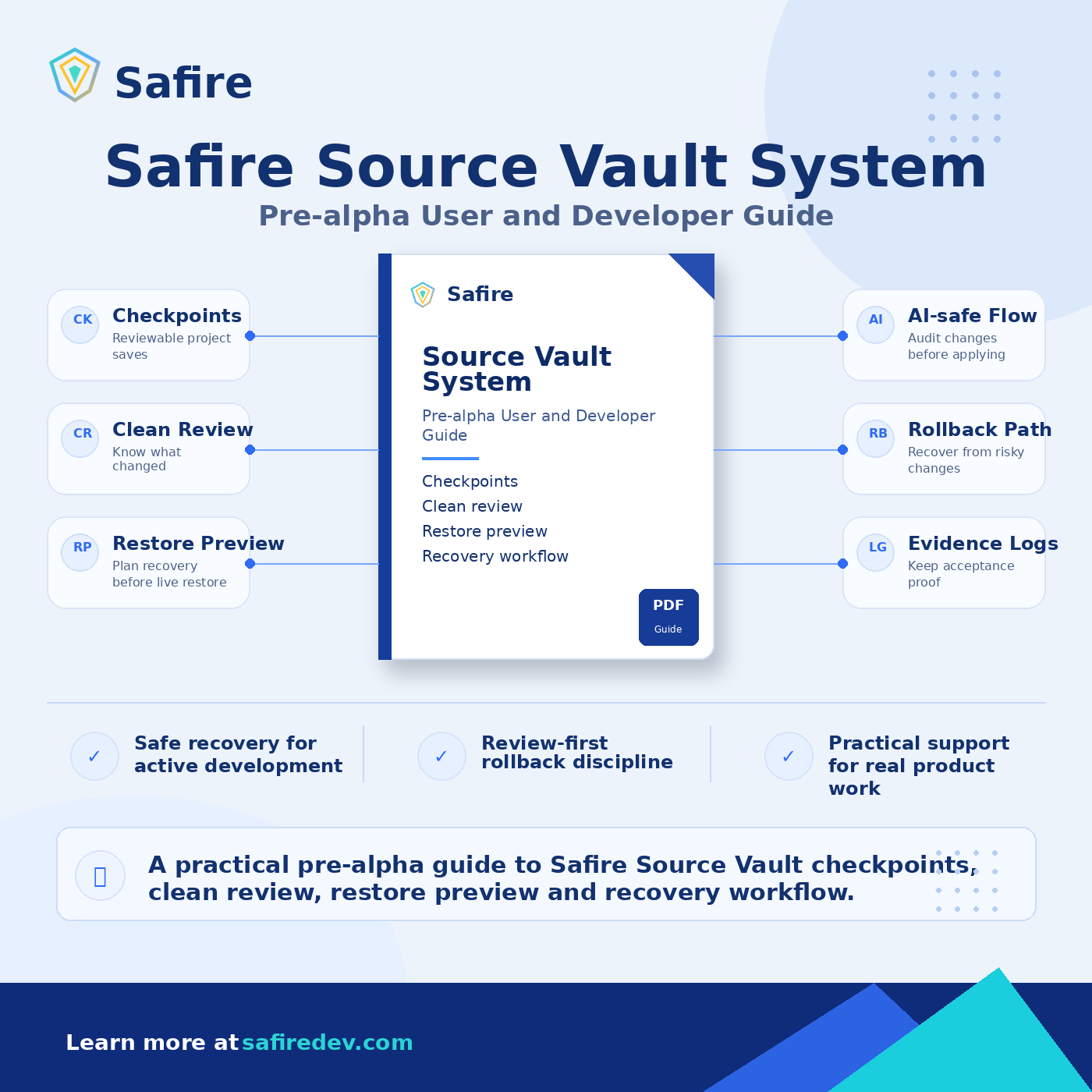
Checkpoints, clean review, restore preview, rollback planning and recovery workflow for safe product development.
Open PDFThe Safire Database System is the data layer used by Safire business applications. It stores structured business data, keeps record identity stable, enforces dictionary rules, maintains keys and indexes, supports safe migrations, and provides maintenance functions such as verify, compact, backup, restore preview, and diagnostic bundle creation.
Safire applications normally interact with the database through high-level objects and dictionary-driven screens. A user sees browses, update forms, lookup windows, reports, dashboards, and business workflows. A developer sees database definitions, table definitions, fields, keys, relations, validation rules, and query objects.
Click the image or button to open the Safire Database System user and developer PDF guide in a new tab.
Open PDFSource Vault is the project recovery and checkpoint workflow for Safire development. It supports reviewable saves, rollback planning, clean-review discipline and safe recovery around risky changes.
Actual Safire UI: the Source Vault interface shown in screenshots is a real Safire program built with Safire UI Components, not a mock-up image.
Click the image or button to open the Source Vault user and developer PDF guide in a new tab. The screenshots page also includes the actual Source Vault UI running as a Safire program.
Safire has its own WAS service and its own WAS Administrator. Together they provide the server/runtime path for hosted applications, review environments and managed site operations.
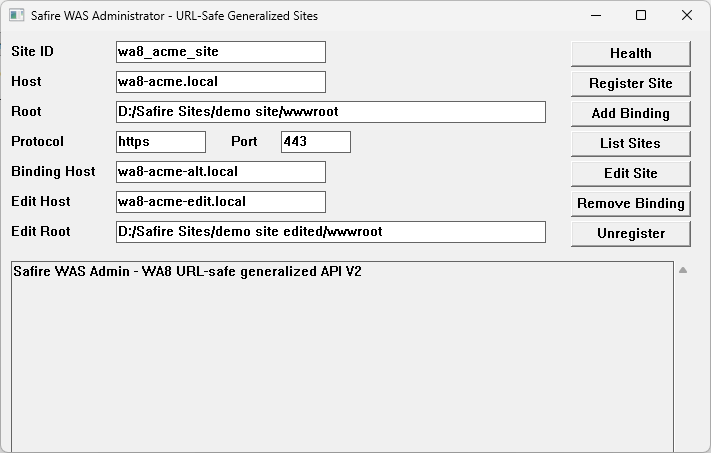
This interface is also an actual Safire program using Safire UI Components. It manages site IDs, hosts, roots, protocols, bindings and runtime operations for the Safire WAS service.
The current direction includes hosting for static content, Safire applications, PHP CGI, FastCGI and WebAssembly-oriented workloads under Safire-controlled administration.
Safire project configuration work allows artifacts to belong to one or more targets, each with its own build, runtime, distribution and signing rules.
Debug/Release Windows Desktop, Windows Service and Linux Service targets, where applicable.
Web Preview, Release Web App, REST API, SOAP API and WebSocket Service targets.
Runtime profiles, distribution profiles, code-signing plans, certificate references, timestamp server and SHA256 signing rules.
Safire can register help artifacts and help contexts in the project model so Help buttons and Help calls can be source-backed.
Safire is a developer preview. Recent engineering work validates source models, contracts and integration hooks. The next engineering work is to deepen compiler lowering, VM/runtime execution, target-aware build and IDE editing surfaces.
Safire is in active Version 1 development. The best reviewers are experienced business software developers who know the cost of fragile tools, hidden metadata and uncontrolled AI edits.